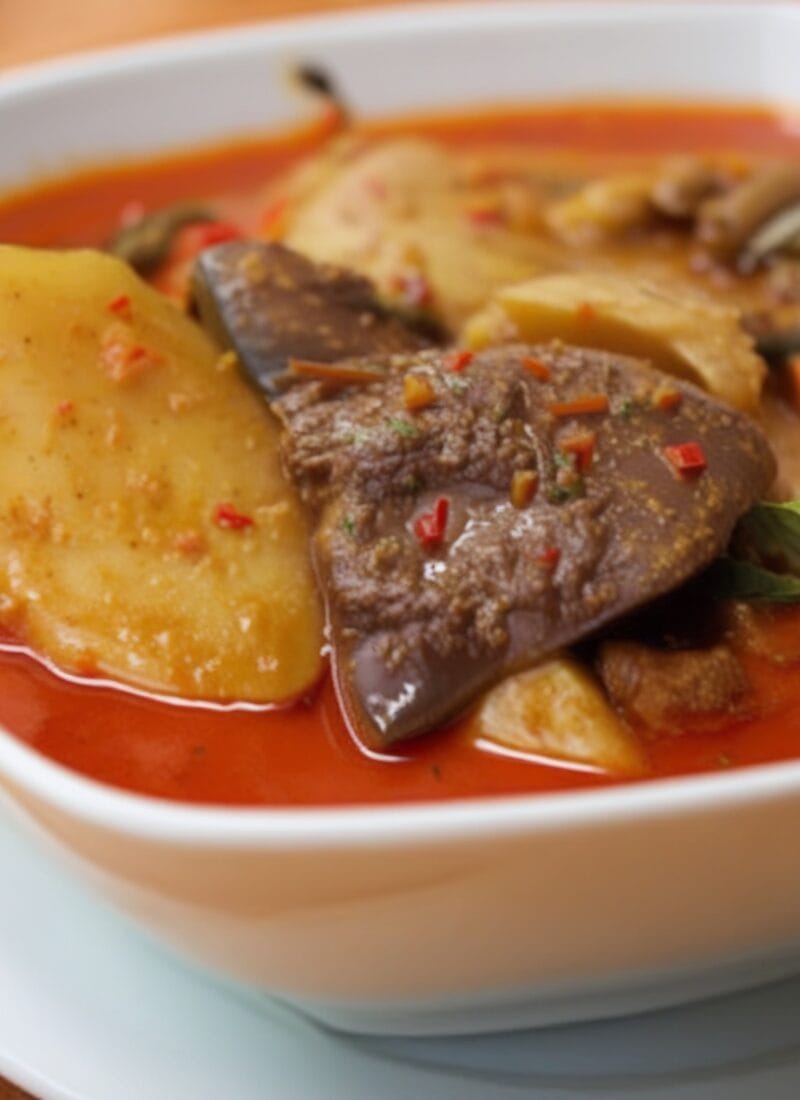
Every time I cook Khmer red chicken curry, my kitchen fills with a smell that feels like home. It is warm, soft, and comforting. The coconut milk gently bubbles, the kroeung releases its aroma, and suddenly I am no longer just cooking. I am remembering.
This is not the kind of food we make every day. In Cambodia, red chicken curry is special. It shows up when family comes together, when elders are honored, and when the house feels full of voices and laughter.
I want to share this recipe with you the way I learned it. Slowly. Kindly. Like I am standing next to you, explaining each step while the pot simmers quietly on the stove.
Why This Curry Has a Special Place in My Heart
This curry is rich but not heavy. It is fragrant but not spicy. That balance is very Khmer. We love deep flavor, but we want everyone at the table to enjoy it, even children and elders.
The coconut milk makes the curry soft and creamy. The red kroeung gives color and warmth, not heat. When you dip bread into the sauce, it soaks everything up. Sweet, salty, and just a little earthy.
It is also a forgiving recipe. You do not need perfect knife skills. You do not need fancy tools. You just need time and care.
Cooking This Curry Through the Years
I first watched this curry being made during Pchum Ben. The house was busy. Someone was washing vegetables, someone was cutting chicken, and someone was always watching the pot.
As I grew older, I was trusted with small tasks. Stirring. Tasting. Adding coconut milk little by little. I learned that this curry is not rushed. You listen to it. You smell it. You adjust gently.
Now when I cook it in my own kitchen, I still hear those sounds. The quiet bubbling. The spoon touching the pot. The soft thud of vegetables going in.
Ingredients You Can Find Without Stress
This recipe uses simple ingredients. Nothing is fancy. Most items can be found at Asian markets, and many are already in regular grocery stores now.
If you cannot find one vegetable, that is okay. Khmer cooking is flexible. What matters is balance and care, not perfection.
Ingredients
- 2 whole chickens (about 1800 grams), Maryland cut with bones
- 3 teaspoons vegetable oil
- 2 teaspoons red kroeung paste
- 1 teaspoon shrimp paste
- 3 teaspoons fish sauce
- 2 teaspoons palm sugar
- 1 teaspoon salt
- 1 cup coconut milk or cream
- 3 cups water
- 2 brown onions, cut into quarters
- 4 snake beans, cut into 2-inch pieces
- 1 small aubergine, cut lengthwise into 2-inch pieces
- 1 sweet potato, peeled and cut
- 1 white potato, peeled and cut
Why Each Ingredient Matters
- Chicken – Gives deep flavor, especially with bones
- Red kroeung paste – The heart of Khmer curry flavor
- Shrimp paste – Adds depth and umami
- Coconut milk – Makes the curry rich and gentle
- Fish sauce – Provides salt and balance
- Palm sugar – Soft sweetness that rounds everything
- Vegetables – Add texture and natural sweetness
Tools You Will Need
- Large pot – To cook everything evenly
- Wooden spoon – For gentle stirring
- Sharp knife – To cut chicken and vegetables
- Cutting board – For safe prep
Let’s Cook Together
Start by heating your pot. When it is warm, add oil and kroeung paste. Stir slowly. You will smell the herbs waking up. This step matters. Do not rush it.
Add the chicken and half the coconut milk. The sound will change. Stir gently so the chicken is coated. Let it cook just a little.
Add vegetables next. Stir carefully. Then pour in water and remaining coconut milk. Season with fish sauce, salt, and sugar.
Lower the heat. Let it simmer. The curry will slowly thicken, and the vegetables will soften. Taste and adjust. This is your moment to listen.
Step-by-Step Directions
- Heat oil in a large pot over medium heat
- Add kroeung paste and stir for 1 minute
- Add chicken and half coconut milk, cook 2 minutes
- Add vegetables and stir gently
- Pour in water and remaining coconut milk
- Season with fish sauce, salt, and sugar
- Simmer on low heat for 20 minutes
Tips for the Best Flavor
- Stir gently to keep vegetables whole
- Taste near the end, not at the beginning
- Use fresh coconut milk if possible
- Let it rest a few minutes before serving
Simple Variations
- Use beef or fish instead of chicken
- Add pumpkin for sweetness
- Make it lighter with more water
- Skip shrimp paste if needed
How We Serve It at Home
- With sliced baguette
- With rice vermicelli noodles
- Alongside fresh herbs
- For family gatherings
Saving Leftovers
- Cool completely before storing
- Keep in fridge up to 3 days
- Reheat slowly on low heat
- Add water if thick
Final Thoughts From My Table
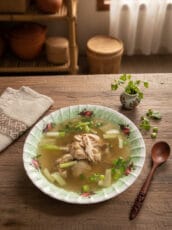
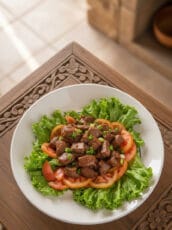
This curry is not just food. It is memory, tradition, and care. If you enjoy this recipe, you may also like Cambodian Beef Lok Lak and Traditional Khmer Chicken Soup on my blog. For deeper cultural background, I often reference Cambodian cuisine history.
I hope this dish brings warmth to your home the way it always has to mine.
Frequently Asked Questions
Q: Is Khmer red chicken curry spicy
A: No, it is mild and gentle
Q: Can I use canned coconut milk
A: Yes, it works well
Q: Do I need kroeung
A: It gives authentic flavor
Q: Can I freeze it
A: Yes, up to one month
Q: What bread is best
A: Soft baguette
Q: Can I cook it longer
A: Yes, for deeper flavor
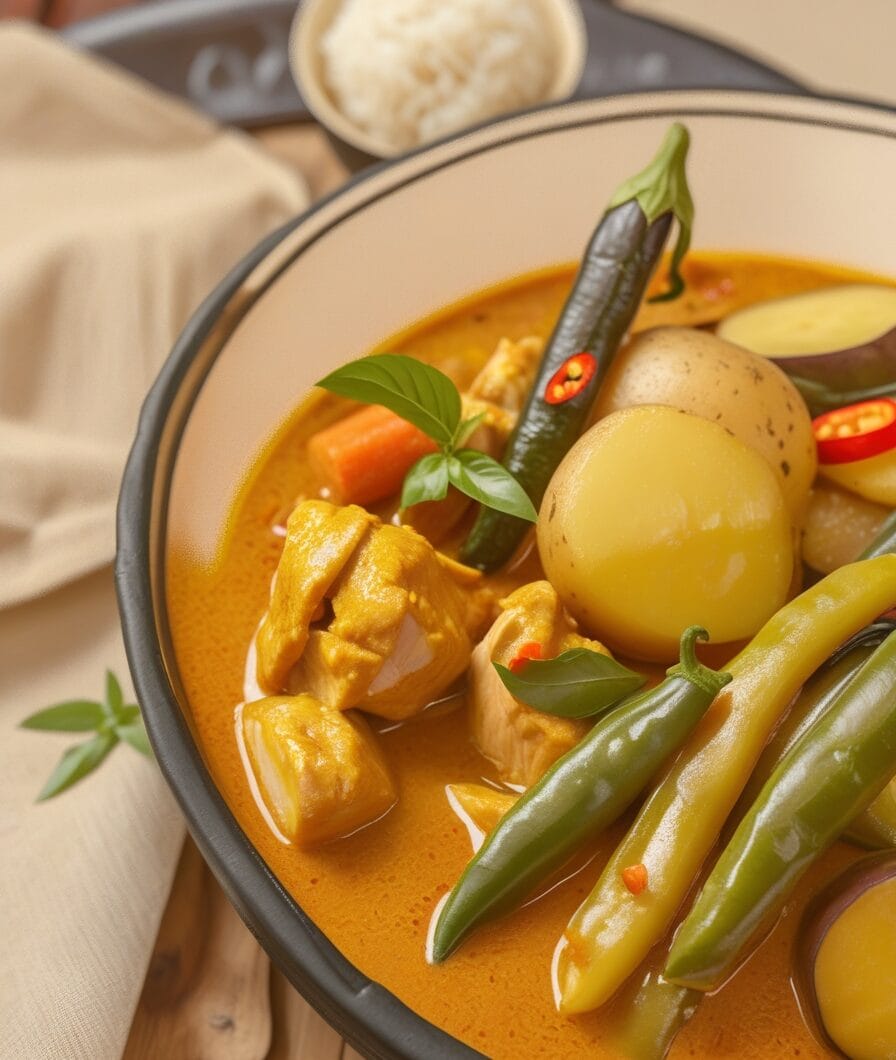
Khmer Red Chicken Curry
4
servings7
hours30
minutesThis Khmer red chicken curry is a gentle, coconut-based dish with tender chicken and vegetables, perfect for family meals and special occasions.
Ingredients
2 2 chicken (1800 gram) Maryland cut into chunky pieces with bones
3 teaspoon 3 vegetable oil
2 teaspoon 2 red kreoung paste (curry paste)
1 teaspoon 1 shrimp paste
3 teaspoon 3 fish sauce
2 teaspoon 2 palm sugar
1 teaspoon 1 salt
1 cup 1 coconut milk/cream
3 cups 3 water
2 2 brown onions cut into quarters
4 4 snake beans cut into 2 inch pieces
1 small 1 aubergine cut lengthwise into 2 inch pieces
1 1 sweet potato
1 1 white potato
Directions
- In a large heated pot, add oil and kroeung paste. Stir for 1 min on medium temperature.
- Add Cambodia village chicken and half the coconut. Cook for 2 mins.
- Add potatoes, beans, aubergine and onion. Stir well.
- Add water, remaining coconut and season with fish sauce, salt and sugar. Stir to combine and let it simmer for 20 mins on low temperature.
Recipe Video
Recipe Notes
- Cut vegetables evenly
- Taste before serving
- Do not boil hard
- Stir gently
- Rest before serving
- Adjust sweetness slowly
Nutrition Facts
- Serving Size: 1g
- Total number of serves: 4
- Calories: 400kcal
- Fat: 28g
- Saturated Fat: 10g
- Trans Fat: 0g
- Polyunsaturated Fat: 4g
- Monounsaturated Fat: 12g
- Cholesterol: 70mg
- Sodium: 600mg
- Potassium: 450mg
- Carbohydrates: 15g
- Fiber: 4g
- Sugar: 5g
- Protein: 25g
- Vitamin A: 700IU
- Vitamin C: 15mg
- Calcium: 30mg
- Iron: 2mg
- Vitamin D: 1mg
- Vitamin E: 3mg
- Vitamin K: 50mg
- Thiamin: 0.3mg
- Riboflavin: 0.2mg
- Niacin: 12mg
- Vitamin B6: 0.5mg
- Vitamin B12: 0.8mg
- Folate: 20mg
- Biotin: 10mg
- Pantothenic Acid: 2mg
- Phosphorus: 200mg
- Iodine: 10mg
- Magnesium: 40mg
- Zinc: 1mg
- Selenium: 20mg
- Copper: 0.1mg
- Manganese: 0.5mg
- Chromium: 0.2mg
- Molybdenum: 15mg
- Chloride: 700mg
Did you make this recipe?
Tag @cambodiarecipe on Instagram and hashtag it
Like this recipe?
Follow us @cambodiarecipe on Pinterest
Did you make this recipe?
Follow us on Facebook
Related Recipe: Easy Cambodian Chicken Lemon Soup